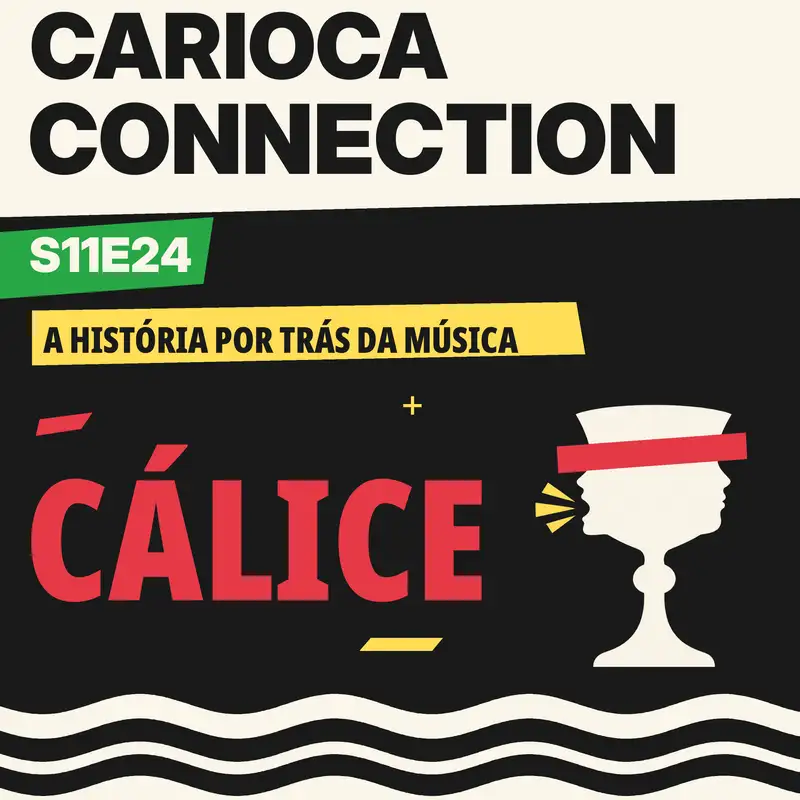
A História por Trás da Música: Cálice
We've just opened a few private coaching spots with Alexia and Foster. Apply here: https://cariocaconnection.com/cc-coaching
In this episode of Carioca Connection, Alexia and Foster talk about “Cálice,” the protest song Chico Buarque and Gilberto Gil wrote in 1973, in the middle of Brazil’s military dictatorship, told entirely in natural Brazilian Portuguese.
In this second episode of their mini-series A História por Trás da Música, they share how the song was censored, why it took five years to be released, and how one word in the title says two things at once: cálice, the chalice, and cale-se, “be quiet.” It’s a great example of how Brazilian Portuguese plays with sound. Alexia walks Foster through the key lines of the lyrics, and along the way you’ll pick up words and expressions like taça, copo, arquibancada and calada da noite. It’s a heavy chapter of Brazil’s history, told simply, and a reminder of how much a song can say when people aren’t allowed to speak. Listen with the lyrics open next to you. With this one, it helps a lot.
As always, this episode is full of authentic Brazilian Portuguese that you won’t find in textbooks or apps. Enjoy!
E agora em português... 🇧🇷
Neste episódio do Carioca Connection, Alexia e Foster falam sobre “Cálice”, a música de protesto que Chico Buarque e Gilberto Gil escreveram em 1973, em plena ditadura militar, tudo em português brasileiro natural.
No segundo episódio da minissérie “A História por Trás da Música”, eles contam como a música foi censurada, por que ela só foi liberada cinco anos depois e como uma única palavra no título diz duas coisas ao mesmo tempo: cálice, o copo, e cale-se, “fique quieto”. É um ótimo exemplo de como o português brasileiro brinca com o som das palavras. A Alexia explica os versos mais importantes da letra para o Foster, e no caminho você aprende palavras e expressões como taça, copo, arquibancada e calada da noite. É um capítulo pesado da história do Brasil, contado de um jeito simples, e um lembrete de quanto uma música consegue dizer quando as pessoas não podem falar. Escute com a letra aberta do lado. Neste episódio, isso ajuda muito.
Como sempre, este episódio está cheio de português brasileiro autêntico que você não vai encontrar em livros didáticos ou aplicativos. Aproveite!
- (00:00) - Boas-vindas e apresentação da minissérie
- (05:25) - Contexto histórico da música Cálice
- (08:25) - Como Cálice foi liberada e quem gravou
- (11:21) - Significado brincando com palavras: Cálice e Cale-se
- (14:28) - Protesto implícito e censura
- (19:28) - Versos-chave e leitura da letra
- (22:20) - Impacto emocional e leitura da letra completa
- (25:56) - Memória, memória afetiva e conclusão
Want to keep learning with us?
CC Coaching: learn 1:1 with Alexia and Foster, with a plan built around your goals and support on WhatsApp between sessions. Apply here: https://cariocaconnection.com/cc-coaching
Free Portuguese Playbooks: guided paths through the show, organized by theme and sent to your inbox. Get them here: https://cariocaconnection.com
Aquele abraço,
Alexia & Foster 🇧🇷